 Bahasa Indonesia
 English
UNY Faculty of Psychology Participates in KONASPI XII to Strengthen Academic Networks and Psychological Science
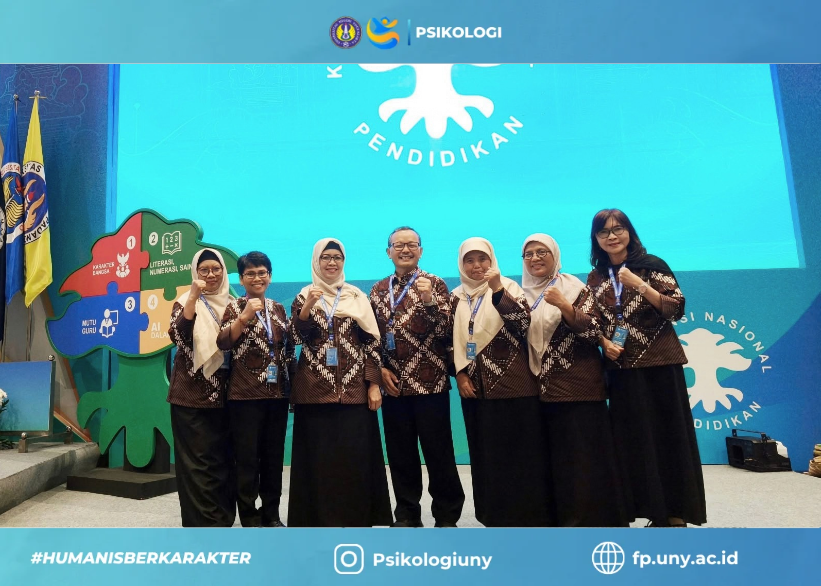
BALI, 2–4 October 2026 — The Faculty of Psychology, Universitas Negeri Yogyakarta (UNY) participated in the 12th National Convention on Indonesian Education (Konvensi Nasional Pendidikan Indonesia/KONASPI XII), held at the Bali Nusa Dua Convention Center (BNDCC), Bali, from 2 to 4 October 2026. The Faculty was represented by its leadership, Faculty Senate, and representatives of its academic programs. The delegation also included the Head of the Master of Psychology Study Program at UNY, who participated as part of the Faculty's representation in discussions on educational transformation, human resource development, and stronger academic networks among higher education institutions.
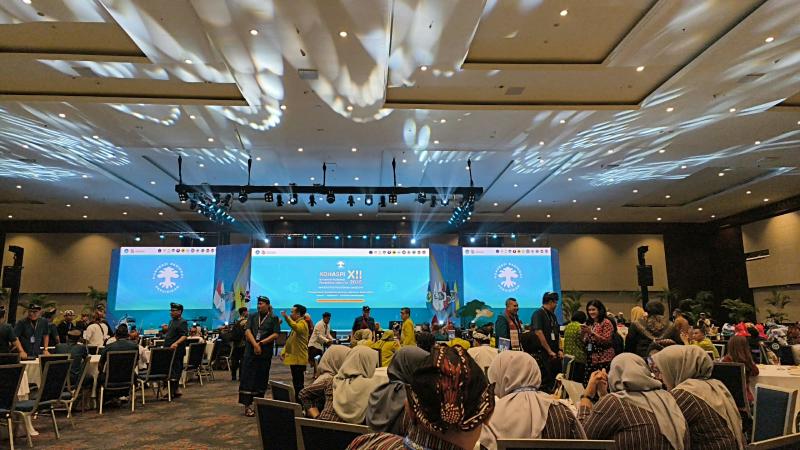
KONASPI XII provided a strategic platform for higher education institutions within the Teacher Education Institutions (Lembaga Pendidikan Tenaga Kependidikan/LPTK) ecosystem to exchange perspectives and experiences concerning the future of Indonesian education. Digital transformation, the rapid development of Artificial Intelligence (AI), changing graduate competency requirements, and the need to establish adaptive and sustainable education systems were among the broader issues addressed throughout the convention. For the UNY Faculty of Psychology, the forum was particularly relevant because educational transformation is ultimately a process of human development. Changes in technology and educational systems influence how people learn, work, interact, make decisions, and develop competencies throughout their lives. Psychological perspectives therefore play an important role in ensuring that educational transformation remains responsive to human needs and well-being. The participation of Faculty representatives, including the Head of the Master of Psychology Study Program, provided an opportunity to broaden perspectives on psychology education at both undergraduate and postgraduate levels. The presence of academic program representatives also strengthened the connection between national discussions on higher education and the development of curriculum, learning, research, academic competencies, and graduates' contributions to society.
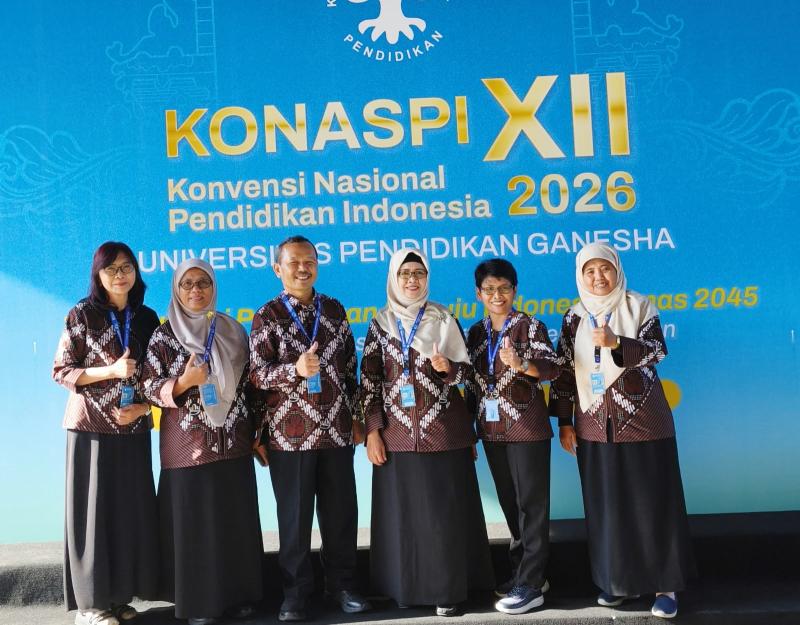
At the master's level, psychology education is not limited to professional competency development but also emphasizes the ability to critically examine complex issues, evaluate scientific evidence, conduct research, and generate knowledge that responds to societal needs. In this context, the participation of the Head of the Master of Psychology Study Program in a national forum such as KONASPI represents an effort to remain engaged with developments in higher education while exploring opportunities to strengthen academic networks and the development of psychological science. Digital transformation and AI also create emerging opportunities and challenges for psychology education. The use of technology in learning, assessment, intervention, research, and psychological services requires not only technical competence but also careful consideration of ethics, human behaviour, privacy, validity, bias, and potential implications for individual and collective well-being.
These issues are becoming increasingly important as digital transformation reshapes the environments in which people learn and work. Individuals are expected to adapt to technological change, while educational institutions must ensure that competency development continues to address psychological needs. Critical thinking, self-regulation, creativity, psychological resilience, collaboration, and digital literacy are increasingly important capacities in navigating this changing environment. One of the major strategic outcomes of KONASPI XII was the formulation of the Bali Recommendations, developed through discussions and focus group sessions held throughout the convention. The recommendations emphasize holistic human development as a central direction for educational transformation, while highlighting character development, foundational learning, teacher quality, the revitalization of LPTKs, and the ethical, inclusive, and adaptive use of technology and AI.
Strengthening character and the philosophy of Indonesian education were among the important elements of this agenda. Education is expected not only to produce academically capable individuals but also people with integrity, responsibility, adaptability, and social awareness. The values of Pancasila and the educational philosophy of Ki Hadjar Dewantara remain important references in ensuring that educational modernization continues to support holistic human development. At the same time, the emphasis on foundational learning through literacy, numeracy, science, and critical thinking highlights the importance of developing individuals who are capable of lifelong learning. For postgraduate psychology education, this principle is particularly relevant because master's students are expected not only to understand established knowledge but also to critically evaluate complex issues, assess scientific evidence, and contribute to knowledge development through research.
The Master of Psychology Study Program at UNY plays an important role in this context through the development of academic and research capacity. Postgraduate education provides a space where psychological theories can be connected with real-world challenges across communities, organizations, educational settings, and professional environments. Research conducted at the postgraduate level is expected not only to advance scientific knowledge but also to provide evidence that can inform interventions, policies, and professional practices.
The presence of the Head of the Master of Psychology Study Program alongside Faculty leadership and Senate representatives also provided an opportunity to expand academic networks with other higher education institutions participating in KONASPI XII. Such engagement creates opportunities for collaborative research, scholarly publication, knowledge exchange, academic capacity building, and community engagement. These networks are increasingly important in addressing complex psychological and educational challenges that require interdisciplinary perspectives.
Beyond strengthening networks, national forums such as KONASPI provide higher education institutions with opportunities to examine educational development from a broader perspective. Universities serve not only as places of learning but also as centres for knowledge creation, innovation, and problem-solving. Within psychology, this role can be strengthened through relevant research, evidence-based interventions, professional capacity development, and contributions to policies that promote human well-being. The participation of the Master of Psychology Study Program within the Faculty's delegation also demonstrates the connection between academic program development and the broader strategic direction of the UNY Faculty of Psychology. Forums such as KONASPI XII provide opportunities to strengthen synergy between undergraduate and postgraduate education, research development, and the Faculty's wider contribution to societal needs.
The educational transformation discussed during KONASPI XII further reinforces the importance of approaches that place people at the centre of innovation. Technological progress should not be measured solely by how rapidly new technologies can be adopted, but also by how effectively they improve learning, expand access, support individual development, and generate equitable benefits for society. Psychology has an important role in understanding how people adapt to such changes and how technology can be designed and used in more human-centred ways. Through its participation in KONASPI XII, the UNY Faculty of Psychology and its academic programs reaffirmed their commitment to higher education grounded in scientific knowledge, research, innovation, and human values. The engagement also contributes to the development of academic networks that can support psychology as a discipline capable of responding to changing social conditions and emerging societal needs.
This participation is aligned with several Sustainable Development Goals (SDGs), particularly SDG 4: Quality Education, through the strengthening of educational quality and lifelong learning; SDG 9: Industry, Innovation and Infrastructure, through research and technology-driven innovation; and SDG 17: Partnerships for the Goals, through stronger collaboration and academic networks among higher education institutions. These efforts also support the development of a more inclusive, adaptive, and sustainable educational ecosystem.
For the UNY Faculty of Psychology and the Master of Psychology Study Program, KONASPI XII provided an important opportunity to strengthen the role of postgraduate education in producing knowledge and human resources capable of responding to future challenges. Amid rapid technological development and increasingly complex social change, psychology education must continue to evolve while remaining firmly grounded in human development. Through research-based education, academic collaboration, and contributions from psychological science, the UNY Faculty of Psychology remains committed to advancing Indonesian education that is high-quality, adaptive, innovative, human-centred, and sustainable.

Contact Us
Faculty of Psychology
Yogyakarta State University
Colombo Street Number 1
Karangmalang, Sleman, Yogyakarta 55281
Indonesia
Email: humas_fp@uny.ac.id, sekretaris.dekanfp@uny.ac.id
Instagram: @psikologiuny